
Why Movement at Every Age Still Matters
Maybe your knees aren’t what they used to be, or a past injury makes you hesitant to push too hard. That feeling is completely valid, but it doesn’t mean movement has to take a back seat. The good news is that you don’t need a gruelling workout to feel better, move more freely, or stay independent.
Low-impact exercises can give your body the activity it needs without putting extra stress on your joints, making it one of the most sustainable ways to stay strong and independent as you age.
A 20-minute walk or a gentle stretch session might not sound like much, but those small efforts add up to something meaningful over time. More energy, improved balance, and a brighter mood are just a few lifestyle benefits that tend to follow.
Why Low-Impact Movement Matters as You Age
Your joints work hard every day to keep you mobile and comfortable as you move. High-impact activities like running or jumping can wear them down faster, especially over time. Low-impact movement keeps things flowing, literally by improving circulation and keeping muscles active.
Regular gentle activity also supports your balance, which plays a significant role in staying safe and independent. When your body feels steady and capable, everyday activities like getting up from a chair, walking to the dining room, or spending time with friends become easier and more comfortable. That kind of physical confidence is worth protecting.
And it’s not just about the physical side. Movement is a natural mood booster. A leisurely walk, gentle stretching, or participating in a group exercise class can help clear your mind, lift your mood, and keep you feeling engaged throughout the day.
6 Low-Impact Exercises Worth Adding to Your Routine
Walking and Gentle Stretching
Walking is one of the easiest and most effective ways to stay active. Whether it’s a stroll through the community, around the courtyard, or down the hallway, regular walks can support heart health, improve circulation, and help maintain strength and endurance.
Pairing a walk with a few minutes of gentle stretching can help improve flexibility, reduce stiffness, and keep your body moving comfortably throughout the day. Even a short daily routine can make everyday movement feel easier.
Chair Exercises and Balance Activities
Chair-based exercises are an excellent way to stay active while reducing stress on your joints. Seated leg lifts, arm raises, and gentle torso twists can help improve strength, flexibility, and mobility.
Simple balance exercises, such as standing while holding the back of a sturdy chair or practicing heel-to-toe walking with support, can also help improve stability and reduce the risk of falls. These movements build confidence and support greater independence in everyday activities.
Resistance Bands and Strength Moves
You don’t need a gym full of heavy weights to build muscle.
Resistance bands are lightweight, affordable, and surprisingly effective at strengthening your arms, legs, and core. They’re also easy to use at home or to take along when you travel.
Simple body-weight moves count, too. Chair squats, wall push-ups, and calf raises are all low-impact ways to keep your muscles engaged. These kinds of exercises help you hold onto the strength that makes daily life feel manageable and comfortable.
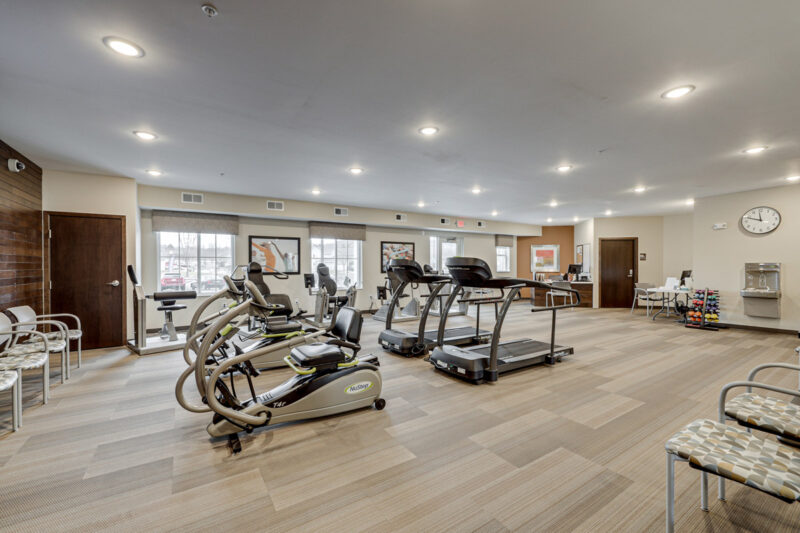
Take a look at a community’s on-site wellness amenities to see what spaces are available for this exact kind of routine.
How to Get Started Safely and Comfortably
The most important rule when starting any new movement routine is to go slow. There’s no trophy for doing too much too soon, and your body will thank you for easing in gradually.
Start with 10 to 15 minutes and build from there as things start to feel easier.
Listen to what your body tells you. A little muscle soreness is normal, but sharp or persistent pain is a signal to rest and talk with your health care provider.
Staying hydrated and eating nourishing meals helps your body recover and keep up its energy.
Ways to Stay Motivated and Keep It Fun
Move with Others
Exercise feels less like a task when you do it with someone else. A walking partner can keep you accountable, and a group fitness class adds a social layer that makes showing up genuinely enjoyable.
The connection you feel during those shared moments is just as good for you as the movement itself. Staying socially active while you move can do a lot for your overall sense of well-being.
Build a Routine That Fits Your Life
There’s no single right time to move. Morning stretches, an afternoon walk, or an evening yoga session all work. The key is choosing something that fits naturally into your day, so that it becomes a habit rather than something you have to talk yourself into.
Mixing up your activities also keeps things from feeling repetitive. Alternating between walking, stretching, and strength moves helps each day feel a little different, and your whole body gets the attention it deserves.
How Havenwood of Onalaska Supports an Active Lifestyle
Staying consistent with movement is a lot easier when your surroundings make it simple. Havenwood of Onalaska offers a wellness center, scenic walking paths, and exercise classes right on-site, so you don’t have to go far to stay active.
The lifestyle and wellness programming available here can provide individualized support for those seeking a more guided approach to their wellness journey.
The right community doesn’t just give you a place to live. It gives you the space, support, and encouragement to keep doing the things that make life feel full. We’d love to show you what that looks like in person. Schedule a visit to explore our community today.